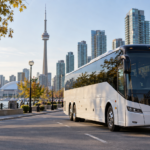
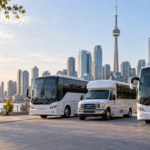
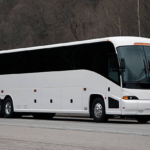
Minibuses seat 12 to 35 passengers. Standard coach buses accommodate 40 to 56. In Ontario, Top Bus operates minibuses and coach-class vehicles across Toronto and the Greater Toronto Area. Double-deckers and other specialist classes are included in the comparison table below for reference. This guide covers accurate capacity figures, what spec sheets consistently miss, and how to match the right vehicle to your group size before you book.
Key Takeaways
- Minibuses seat 12 to 35 passengers and work best for private groups under 30 traveling shorter routes where a full coach is unnecessary.
- Standard coach buses hold 40 to 56 passengers, with full underfloor luggage bays capable of carrying significant baggage volume on each side of the vehicle.
- Double-decker coaches transport 70 to 90 passengers — the highest single-vehicle capacity for large events in the Greater Toronto Area.
- Charter bus rental costs are shaped by vehicle type, trip length, group size, and the amenities selected — not just seat count alone.
- Booking early is recommended for peak demand periods including school field trips, sports team travel, and corporate events across Ontario.
Quick Spec Table
The table below covers all major bus types side by side. Use it as a fast reference before reading into the sections where the numbers get more specific.
By Class
| Vehicle Class | Seated Capacity | Luggage Bay | Onboard Washroom | Best Use Case |
|---|---|---|---|---|
| Minibus | 12–35 | Overhead bins only | Rarely | Small private groups, urban routes |
| Standard Coach Bus | 40–56 | Full underfloor bays | Usually | School trips, weddings, corporate events |
| Full-Size Charter Bus | 47–56 | Full underfloor bays | Yes | Sports teams, tour groups |
| Double-Decker Coach | 70–90 | Underfloor on lower deck | Yes | Stadium runs, large conferences |
| Articulated Bus | 60–80 | Varies by operator | Varies | High-volume fixed routes |
| City Bus (transit) | 40–60 | None | No | Urban transport, bus stops only |
City buses are included for reference only. They are transit vehicles built for bus stops, standing room, and high-frequency boarding — not charter group travel.
Smallest Class — Minibus (12–35 Passengers)
Minibuses accommodate 12 to 35 passengers and are the standard vehicle for smaller private groups, airport transfers, and tours across tighter urban routes. The shorter wheelbase means mini coaches can reach downtown Toronto venue access points and parking areas that a full-size coach cannot.
Matching a minibus to a smaller group also makes financial sense. Running a 56-seat coach bus at 40 percent capacity adds cost without adding comfort. A properly-sized vehicle keeps per-seat spend in line and ensures everyone travels together without the wasted space of an oversized bus.
Seated Capacity
The published capacity range for minibuses is 12 to 35 seats. In practice, the realistic figure for most configurations is 24 to 30, once standard seat pitch, any accessible seating requirements, and the driver area are accounted for. Always request the configured seat count from your operator — not the maximum figure on the spec sheet — before finalizing your headcount.
Luggage Caveat
Minibuses carry limited luggage. Most configurations offer overhead bins only, with no underfloor storage. Groups traveling with checked-bag volumes or equipment should move to a coach class vehicle. This is the most common miscalculation made on minibus bookings.
Mid Class — Standard Coach Bus (40–56 Passengers)
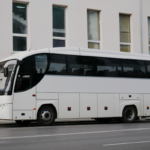
Standard coach buses seat 40 to 56 passengers and are the most widely used vehicle class for school field trips, corporate events, sports teams, and wedding groups across Ontario. The underfloor luggage bays on a standard coach run the full length of both sides of the vehicle — comparable in total volume to a domestic flight hold.
Amenities at this class level typically include reclining seats, climate control via air conditioning, onboard restrooms, and entertainment systems on newer models. Luxury tour buses within this class may run closer to 40 to 47 seats when more onboard space per passenger is prioritized over raw capacity.
Seated Capacity
Standard coach buses seat 40 to 56 passengers. Most operators configure their vehicles toward the upper end of that range. Luxury configurations may sit closer to 40 to 47 when reclining seats and entertainment systems take up additional space. Confirm the actual configured seat count with your operator — the spec-sheet maximum is not a booking number.
Largest Class — Double-Decker and Articulated Buses (70–90 Passengers)
Double-decker coaches carry 70 to 90 passengers. The lower deck typically holds 30 to 40 seats and the upper deck adds another 40 to 50. Underfloor luggage bays run beneath the lower deck. This is the highest single-vehicle capacity available in the Toronto charter market.
Articulated buses — the accordion-connected vehicles common in urban transport systems — carry 60 to 80 passengers depending on configuration. They operate more commonly in fixed-route transit than in charter contexts in the GTA.
City buses hold 40 to 60 passengers in standard transit configuration. A typical city bus costs approximately US$450,000 to procure, and the operating model — frequent bus stops, standing room, and urban transport routing — does not translate to group charter travel. They are not charter vehicles.
How to Pick by Group Size
The right vehicle is the one that fits your actual confirmed headcount with room for luggage and a comfortable seat margin. Oversizing adds unnecessary cost. Undersizing creates real problems on the day.
Use the breakdown below to map your group size to the appropriate vehicle class before you request quotes. Keep in mind that the capacity figures referenced here are configured counts, not spec-sheet maximums — the difference between the two can run four to eight seats, which is a meaningful margin when your group is near a class boundary.
Groups Under 35 Passengers
Mini coaches are the standard vehicle for this range. They are properly sized, cost-efficient, and can reach more venue access points than a full-size charter bus. For groups under 20, sprinter-style vehicles in the 12 to 15 passenger range are an option — though these book out quickly during peak periods, including graduation season, school field trips, and sports tournament travel, so confirmation should happen early.
Check luggage configuration before confirming a minibus. Overhead bins fill quickly with 30 travelers each carrying a bag. Groups with more luggage than a carry-on each should reassess the vehicle class rather than assume overhead space will cover it.
Groups of 40–56 Passengers
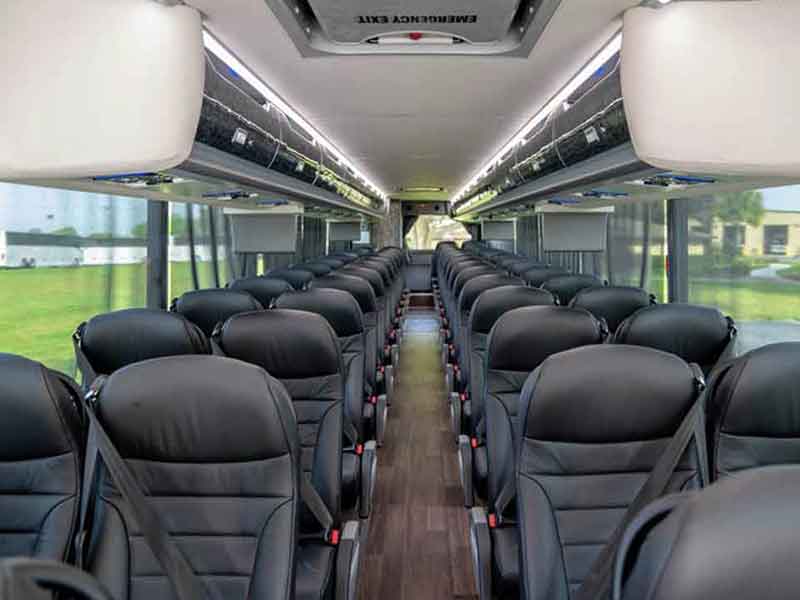
Standard coach buses are the natural fit for this group size. Reclining seats, onboard restrooms, and climate control are base features at this level. The underfloor luggage bays handle significant baggage volume, which matters for corporate events with equipment, sports teams with gear bags, or wedding groups traveling with overnight luggage.
Before confirming a vehicle for a group in this range, review the comparison at Charter bus vs mini bus vs party bus which to pick. The right configuration depends on whether the priority is raw capacity, onboard comfort, or entertainment features — and the answer is not always the standard coach.
Groups of 57 and Above
Over 56 passengers means a double-decker coach or a multi-vehicle convoy run. Double-decker coaches carry 70 to 90 passengers on a single vehicle, which eliminates the coordination variables of a convoy and keeps the full group together for arrival at large events or venues.
Two standard coaches traveling together handle groups up to 112 passengers. Toronto charter bus operators typically coordinate matched departure times for convoy bookings. Arrival logistics at the destination — where buses stage, how boarding is managed on the return — require more planning with two vehicles than one, so factor that into the decision.
Measurement Gotchas — Where Published Figures Mislead
Published capacity figures are maximum configurations. The practical number you should plan to — legally compliant, operationally realistic, and comfortable — is reliably lower than what appears on the spec sheet. Three factors drive that gap: seat pitch, accessible seating requirements, and luggage. Each one is worth understanding before you confirm a headcount.
The Seat Count on the Spec Sheet
Charter bus manufacturers publish maximum seating at the tightest legal seat pitch, with no accessible seating allocation and no space reserved for guides or escorts. That number exists to describe the vehicle at its densest legal configuration — not to guide your booking.
A standard coach bus quoted at 56 seats typically delivers 47 to 52 usable positions once you apply a seat pitch that allows reclining, allocate accessible seating if required, and account for the driver area and any front escort seat. Booking 56 passengers into a 56-seat configuration leaves no margin for a late headcount addition, no flexible seating for couples traveling together, and no accessible position if someone in the group needs one.
For a full breakdown of how seat count translates across coach configurations, What is the seating capacity of a coach bus covers the complete picture across vehicle classes.
How Luggage Changes the Equation
Standard coach bus underfloor bays are substantial, but they are not unlimited. A group of 50 passengers each carrying a large rolling suitcase, a day bag, and a personal item will fill those bays before the last few people board. The luggage math should happen before passenger count is confirmed — not after the vehicle is loaded and the bay is already full.
Sports teams with equipment bags, tour groups with multiple checked pieces, and any event with large props or production gear should either reduce the passenger count to free bay capacity, request a vehicle with extended underfloor storage, or arrange a separate luggage vehicle. These are operational decisions that need to be made at booking, not at departure.
For specific bay volume figures by vehicle class, How much luggage fits under a coach bus gives you the real numbers rather than manufacturer averages.
Accessibility and Special Configurations
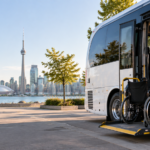
Accessible seating positions reduce the usable seated capacity further. Wheelchair positions typically displace two to four standard seats depending on the vehicle layout and tie-down equipment required. In Ontario, accessible seating on charter vehicles is a legal requirement when requested — it cannot be declined or treated as optional.
If any member of your group requires an accessible position, confirm that configuration count against your confirmed headcount before finalizing the booking. The accessible seat count and the standard seat count both need to fit within the vehicle’s actual configured total — not the spec-sheet maximum. This is the detail that causes the most booking headaches, and it can be resolved with one direct question to your operator at the quote stage.
What Top Bus Actually Runs in Toronto
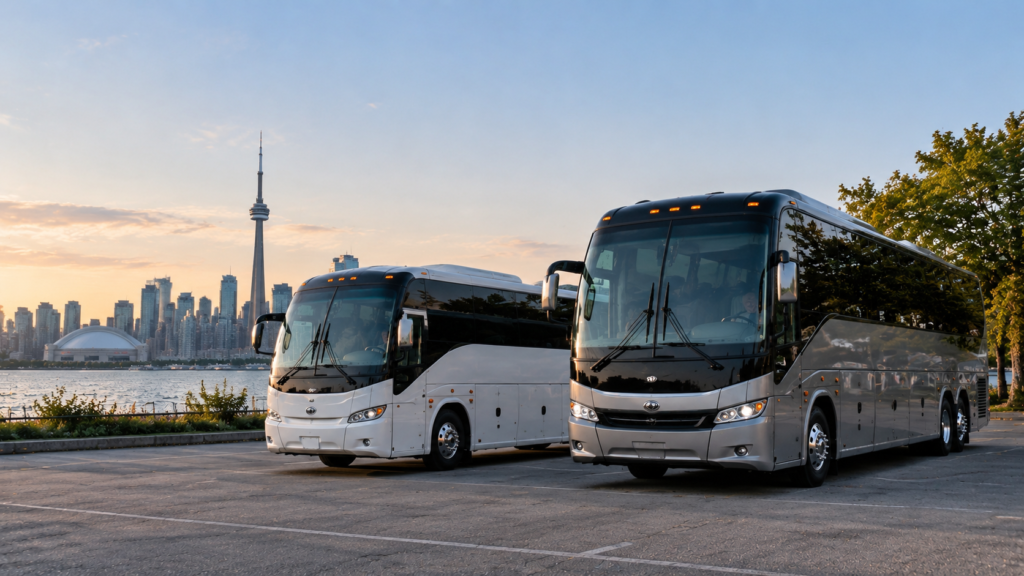
Top Bus operates a fleet of charter buses, mini coaches, and coach buses across Toronto and the Greater Toronto Area. Service runs to Mississauga, Brampton, Vaughan, Markham, Oakville, Hamilton, Niagara Falls, and Ottawa. The fleet handles corporate events, school field trips, sports teams, wedding groups, tour groups, and private group transfers across all capacity classes.
View our fleet to see current vehicle configurations with confirmed seated capacities and amenity details for each class before requesting a quote.
Mini Coaches
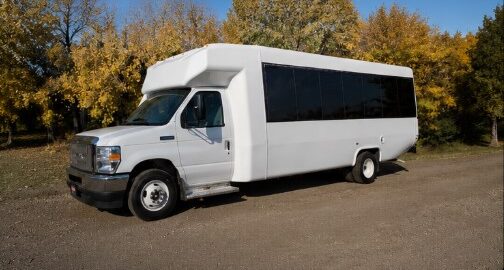
The Top Bus mini coach fleet accommodates 24 to 35 passengers depending on configuration. Downtown Toronto routes, tight venue access points, and smaller group budgets are where these vehicles perform best. They navigate the city’s tighter streets and venue drop-off points more easily than full-size coaches.
Mini coaches are well-suited to day trips and short-range transfers where checked-bag volumes are low. For multi-day itineraries with full luggage, the limited overhead storage moves the booking into coach class. Running a full-size bus for a group of 20 is unnecessary spend — the mini coach covers it properly.
Standard Coach Buses
Standard coach buses form the core of the Top Bus operation, with a seated capacity of 40 to 56 passengers. Full underfloor luggage bays, onboard washrooms, climate control, and reclining seats are standard across this class. Newer models carry entertainment systems for longer-haul trips.
Safety features include anti-lock braking systems, and all vehicles are maintained to Ontario road safety standards with routine inspections in compliance with provincial regulations. Trained professional drivers handle all navigation — Toronto traffic, GTA venue access logistics, and multi-stop itineraries — removing parking and routing stress from the group entirely. Buses are among the safest vehicles on the road, and keeping the full group on one vehicle under a professional driver is a safety outcome in itself.
Premium and High-Capacity Options
For events requiring over 56 seats, Top Bus coordinates double-decker configurations and multi-vehicle convoy runs. Double-decker coaches carry 70 to 90 passengers on a single vehicle, which keeps the full group together and cuts the coordination overhead of a multi-vehicle run at large venues.
If the terminology between charter bus and coach bus at this class level is creating confusion before you book, What is difference between a coach bus and a charter bus clarifies how the terms are used in practice and what they mean for a specific booking in the Toronto market.
Frequently Asked Questions
These are the questions groups in Toronto actually search before booking. Each answer leads with the direct response before adding operational detail. Comparison of multiple quotes is advised before committing to a vehicle — pricing varies by operator, configuration, and trip length, so the quote stage is where capacity and cost align.
How many passengers does a charter bus hold?
Charter buses accommodate 12 to 90 passengers depending on the vehicle class. Minibuses seat 12 to 35. Standard coach buses seat 40 to 56. Double-decker coaches carry 70 to 90 passengers. The right vehicle depends on your confirmed headcount, luggage volume, trip length, and whether your group requires onboard amenities such as restrooms, entertainment systems, or accessible seating positions.
What is the seated capacity of a standard coach bus?
Standard coach buses typically seat 40 to 56 passengers. The exact figure varies by manufacturer, model, and configuration. Luxury tour buses within this class often carry fewer seats — closer to 40 to 47 — when reclining seats and entertainment systems take priority over maximum capacity. Always confirm the actual configured seat count with your operator, not the spec-sheet maximum, before finalizing your headcount against the vehicle.
What bus types are best for large events and corporate events?
For large events and corporate events with over 50 passengers, standard coach buses or double-decker coaches are the primary options. Double-decker coaches carry 70 to 90 passengers on one vehicle, keeping the group together and cutting arrival logistics at venues. For groups between 40 and 56, a standard coach bus covers both capacity and comfort at a lower cost point than a double-decker configuration. Groups under 35 are better served by mini coaches.
How many seats does a double-decker coach have?
Double-decker coaches seat 70 to 90 passengers. The lower deck holds approximately 30 to 40 seats and the upper deck adds another 40 to 50. Luggage bays run beneath the lower deck. These are the highest single-vehicle capacity option for charter travel in Toronto and are suited to stadium events, large conferences, and high-volume group transportation where keeping the full group on one vehicle matters for coordination.
How do mini coaches differ from full-size buses for private groups?
Mini coaches seat 12 to 35 passengers and are suited to smaller private groups, urban routes, and transfers without heavy luggage. Full-size charter buses seat 40 to 56 and carry full underfloor luggage bays, onboard washrooms, and more onboard space. Running a full-size bus at half capacity raises per-seat cost with no offsetting benefit. Match the vehicle class to the confirmed headcount — that is the most direct way to control cost and comfort at the same time.
What is the best bus for a school field trip or sports team?
Standard coach buses are the standard choice for school field trips and sports teams in Ontario. They seat 40 to 56 passengers, carry full luggage and equipment in underfloor bays, and include seat belts and anti-lock braking systems as standard safety features. For school groups under 35 students, mini coaches reduce cost without reducing safety standards. For sports teams with equipment bags, confirm underfloor bay capacity against the equipment volume before the passenger count is finalized.
About Top Bus
Top Bus is a licensed group transportation operator based in Toronto, serving the Greater Toronto Area and destinations across Ontario. The company operates charter buses, mini coaches, and coach buses for corporate events, school field trips, wedding groups, sports teams, and private tour groups.
Fleet vehicles are maintained to Ontario road safety standards and undergo routine inspections in compliance with provincial regulations. All drivers are trained professionals with operational experience across Toronto traffic, GTA venue access logistics, and multi-stop itineraries throughout the region.
Most charter bus quotes from Top Bus include driver, fuel, and insurance. Pricing is influenced by vehicle type, trip length, group size, and selected amenities. Minimum booking periods for local trips typically run around 4 to 5 hours. Charter bus rentals reduce overall transportation costs for large groups compared to individual rideshare or taxi arrangements, and keeping the full group on one vehicle improves arrival coordination at any event.
Service Area
Top Bus serves Toronto, Mississauga, Brampton, Vaughan, Markham, Oakville, Hamilton, Niagara Falls, and Ottawa. The service area covers the full Greater Toronto Area and extends to intercity routes across Ontario. Local driver knowledge across these municipalities — including GTA venue access requirements and city-specific traffic patterns — is a core feature of the service rather than an afterthought.
Next Step
Check vehicle availability and confirmed seat configurations for your group at view our fleet. Provide your passenger count, trip date, and itinerary to receive an accurate quote. Booking early is recommended — demand for peak periods including school field trips, sports team travel, and corporate events fills quickly across the Toronto area.
Top Bus serves Toronto and the Greater Toronto Area. For a full list of service locations, visit our Area we serve page.