Every Top Bus driver passes a multi-step driver vetting process before transporting a single passenger. Licence verification, criminal record checks, driving history review, third-party training, skills assessment, and annual monitoring — the process is thorough because passenger safety is non-negotiable.
This guide explains exactly how Top Bus vets its drivers, what Ontario’s legal requirements are for private transportation companies, and why a rigorous vetting process protects every passenger on every ride.
Top Bus Driver Vetting Process: Step-by-Step Overview
Every new Top Bus applicant must complete all steps in sequence before operating any vehicle.
| Step | What We Check | Standard Required |
| 1. Licence Verification | Valid Ontario driver’s licence, licence class, licence issuance date | Minimum Class G; Class A or C with Passenger endorsement for vehicles over 24 passengers |
| 2. Driver Abstract Review | Person’s driving history — demerit points, convictions, suspensions, violations | Abstract no more than 30 days old; reviewed against Highway Traffic Act standards |
| 3. Criminal Record Check | Criminal record, background check across federal and provincial records | Clear criminal record required; obtained before hire approval |
| 4. Vehicle-for-Hire Training | Third-party training program — five online modules plus live class | Minimum 70% score on final exam; completion certificate submitted before licensing |
| 5. Practical Skills Assessment | Driving skills evaluation — vehicle handling, passenger safety, all weather conditions | Pass conducted skills assessment including air brake endorsement, where applicable |
| 6. Medical Evaluation | Physical fitness to operate a vehicle; meets medical requirements for the licence class | Pass required; annual review for ongoing fleet operations |
| 7. Ongoing Monitoring | Annual driver abstract review; demerit point tracking; violation flagging | Driver records updated every 12 months; three years clean history minimum |
The driver vetting process minimises liability and ensures passenger safety from initial application through to annual reviews, years into a driver’s tenure.
Driver’s Licence Requirements for Transporting Passengers in Ontario
Ontario Has 12 Licence Classes — Only Some Qualify
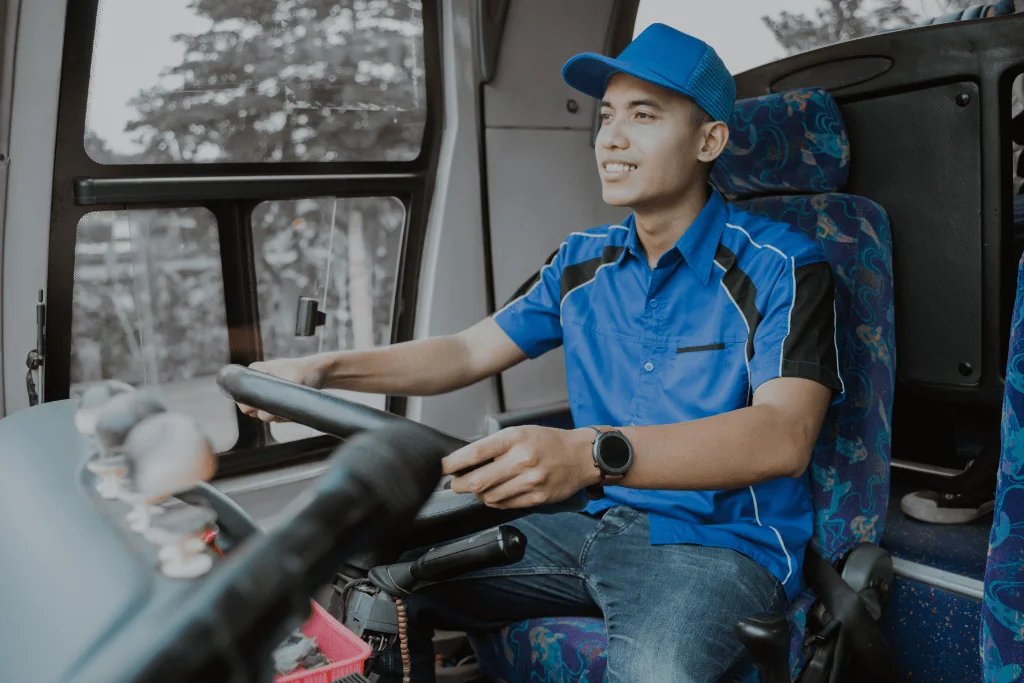
Ontario has 12 different classes of driver’s licences. A Class G licence is the standard licence required to drive cars and small trucks — but transporting passengers commercially requires a higher classification. Any driver operating a vehicle for hire carrying more than 24 passengers in Ontario must hold a Class A or Class C licence with a Passenger (P) endorsement, as required under the Highway Traffic Act.
All Top Bus motor coach drivers hold Class A or C licences with Passenger endorsements. Sprinter Van drivers hold a minimum Class G. Licence class is verified at initial vetting and every annual review.
Licence Verification: What We Check and Why
Licence verification validates currency and status — a suspended licence is an immediate disqualifier. Top Bus reviews the issuance date, expiry, and current status before approving any applicant.
A driver’s licence number is used to obtain the driver abstract — the official record of a person’s driving history in Ontario. The abstract must be no more than 30 days old, ensuring Top Bus is working from current records that reflect any recent violations or licence status changes.
Reviewing Proper Driver Qualification Records: The Driver Abstract
What Is a Driver Abstract?
A driver’s abstract is a person’s official driving history record — convictions, suspensions, demerit points, and violations. For private transportation companies assessing new drivers, it is the most important document in the review process.
Top Bus requires a commercial driver’s abstract — no more than 30 days old — for all applicants. Drivers with a pattern of demerit points, suspensions, or violations within three years are not approved.
What We Look For in Driving History
The driving history review focuses on demerit points, conviction history, and any licence suspension. A driver with a significant demerit point count represents a safety risk regardless of licence tenure.
Annual reviews identify new violations or risk patterns. Driver records must be updated every 12 months after hiring — ensuring a clean record at hiring remains a clean record throughout a driver’s tenure.
Criminal Record Check: A Non-Negotiable Step
Why a Criminal Record Check Is Required
A criminal record check is required for every Top Bus driver applicant. Background checks cover criminal records and employment history to assess safety risks — transporting passengers demands a higher standard than a clean driving record alone.
A criminal record check is required through an approved provider before any hire decision. A driver presenting a safety risk will not be approved. This is of particular importance for school bus driver applications.
Ontario Human Rights Code Compliance
Not every criminal record is an automatic disqualifier — nature, recency, and relevance to the role of transporting passengers is assessed individually, in compliance with the Ontario Human Rights Code.
Driver Training: The Vehicle-for-Hire Training Program
What Ontario Requires for Vehicle-for-Hire Drivers
In Ontario, a vehicle for hire driver must complete a City of Toronto-approved Vehicle-for-Hire training program before obtaining a licence to transport passengers.
The program includes five online modules and a live class. Drivers must score at least 70% on the final exam and submit a completion certificate before being approved to operate.
Third-Party Training Program Requirements
Drivers complete a third-party training program through an approved provider — independently validated, not self-assessed, giving the training legal standing under Ontario’s private transportation company regulations.
Air Brake Endorsement and Additional Qualifications
Drivers operating full-size motor coaches must hold an air brake (Z) endorsement on their Ontario driver’s licence. Without it, a driver cannot legally operate the class of vehicle used for most Top Bus charter bus routes. The endorsement requires completing an approved course and passing a practical skills test.
Practical Driving Skills Assessment
What the Skills Assessment Covers
Skills assessments are practical — not just paper reviews. Drivers must demonstrate vehicle handling, passenger management, and the ability to operate safely on the QEW, in Toronto traffic, and in adverse weather.
All-weather driving competency is part of the assessment — drivers who cannot demonstrate it do not advance through the vetting process.

Medical Fitness Evaluation
Medical fitness evaluations are required under the Highway Traffic Act for commercial licence classes. Drivers who do not meet the medical requirements cannot remain in passenger transport.
Medical fitness is reviewed at licence renewal and flagged in annual record reviews.
Ongoing Driver Monitoring: Annual Reviews and Record Updates
Why Annual Reviews Matter
Top Bus maintains annual driver abstract reviews — any new violations, demerit points, or suspensions are assessed against our qualification standards.
Annual reviews identify new violations before they become safety incidents — including progressive demerit patterns that don’t trigger a single disqualifying threshold.
Drug, Alcohol, and Conduct Standards
Rigorous drug and alcohol testing is required for driver compliance. Drivers are subject to zero-tolerance standards under the Highway Traffic Act, and any driver involved in an impairment-related incident is subject to immediate review and possible removal from service.
Conduct monitoring to cover passenger complaints, scheduling violations, and vehicle handling. Professional conduct when transporting passengers is a continuing requirement, not a one-time assessment.
Why the Driver Vetting Process Matters for Passengers
What Passengers Should Ask Any Transportation Provider
When choosing a private transportation company, the driver vetting process is one of the most important things to verify. Ask any provider:
• Does every driver hold a valid Ontario driver’s licence with the correct licence class for the vehicle they’re operating?
• Is a criminal record check required for all new applicants before hire?
• Do drivers complete a third-party training program and provide a completion certificate?
• Are driver abstracts reviewed at hiring and updated annually?
• Are all drivers medically evaluated and fit to operate their vehicle class?
Top Bus’s Commitment to Passenger Safety
Every Top Bus driver has passed the full driver vetting process — licence verification, abstract review, criminal record check, third-party training, skills assessment, medical evaluation, and annual monitoring. We operate under full CVOR compliance with Class A/C licensed drivers and commercial liability coverage on every vehicle.
The driver vetting process at Top Bus is a documented, step-by-step system — not a marketing claim. Every passenger who rides with us safely reaches their destination.
Why Choose Top Bus?
Top Bus provides professional group transportation across the Greater Toronto Area and Southern Ontario with a fully vetted driver team.
What passengers and clients can expect:
• All drivers hold valid Ontario driver’s licences with the correct licence class — Class A/C with Passenger endorsement for motor coach operations
• Criminal record checks completed for every new applicant before hire approval
• Third-party training program completed with minimum 70% pass score and certificate submitted
• Driver abstracts reviewed at hiring and updated every 12 months
• Medical fitness evaluations and air brake endorsements for full-size coach drivers
• CVOR-compliant operations, full commercial liability coverage, and ongoing annual monitoring
When you book with Top Bus, you’re booking a driver who has been assessed, trained, certified, and monitored. That’s the standard every passenger deserves.
Frequently Asked Questions About Top Bus’s Driver Vetting Process
What is the driver vetting process at Top Bus?
The Top Bus driver vetting process covers seven steps: Ontario driver’s licence verification, driver abstract review (no more than 30 days old), criminal record check, Vehicle-for-Hire third-party training completion, practical skills assessment, medical fitness evaluation, and annual monitoring. Every new applicant must pass all steps before operating any vehicle. The process meets all Ontario legal requirements and minimises safety risks for every passenger.
What Ontario driver’s licence class is required to transport passengers on a Top Bus coach?
Drivers operating Top Bus motor coaches — Prevost (56 passengers), Van Hool (55), and MCI J45 (47) — must hold a Class A or Class C Ontario driver’s licence with a Passenger (P) endorsement, as required under the Highway Traffic Act. Full-size coaches also require an air brake (Z) endorsement. A standard Class G licence is insufficient for vehicles of this size. All drivers are verified against these requirements before hire and at each annual review.
Does Top Bus comply with the vehicle-for-hire driver training requirements in Ontario?
Yes. All Top Bus drivers complete a Vehicle-for-Hire training program through an approved third-party provider before transporting passengers. The program includes five online modules and a live class. Drivers must score at least 70% on the final exam and submit a completion certificate before licensing is confirmed. This is a legal requirement for vehicle-for-hire drivers in the Greater Toronto Area.
What are the legal requirements for driver’s licences at Top Bus?
Legal requirements for Top Bus drivers include: a valid Ontario driver’s licence at the correct class; a Passenger (P) endorsement for vehicles over 24 passengers; an air brake (Z) endorsement for motor coaches; completion of an approved Vehicle-for-Hire training program; and a current criminal record check. These requirements are set by the Highway Traffic Act and Ontario’s vehicle for hire licensing framework. Top Bus verifies compliance at hiring and through annual reviews.
How does Top Bus handle ongoing monitoring of its drivers after hiring?
Top Bus conducts annual driver abstract reviews for every driver. Records are updated every 12 months — any new demerit points, convictions, or suspensions are assessed against our qualification standards. A driver whose record deteriorates is subject to the same review as a new applicant. Drug and alcohol compliance, professional conduct, and medical fitness are monitored throughout the driver’s tenure.
What does transporting passengers safely require from a Top Bus driver?
Transporting passengers safely at Top Bus requires: a valid Ontario driver’s licence at the correct class, a clear criminal record, a three-year clean driving history, 70%+ completion of the Vehicle-for-Hire training program, a practical skills assessment demonstrating all-weather competency, a current medical fitness evaluation, and air brake endorsement for motor coaches. Beyond hire, it requires ongoing conduct standards, annual record reviews, and zero-tolerance drug and alcohol compliance.
| Book with Confidence — Contact Top Bus Today. Every Top Bus driver is vetted, licensed, trained, and monitored — so your group travels safely across the Greater Toronto Area and Southern Ontario. Call or Text: +1 289-402-5287 , Email: info@topbus.ca |